
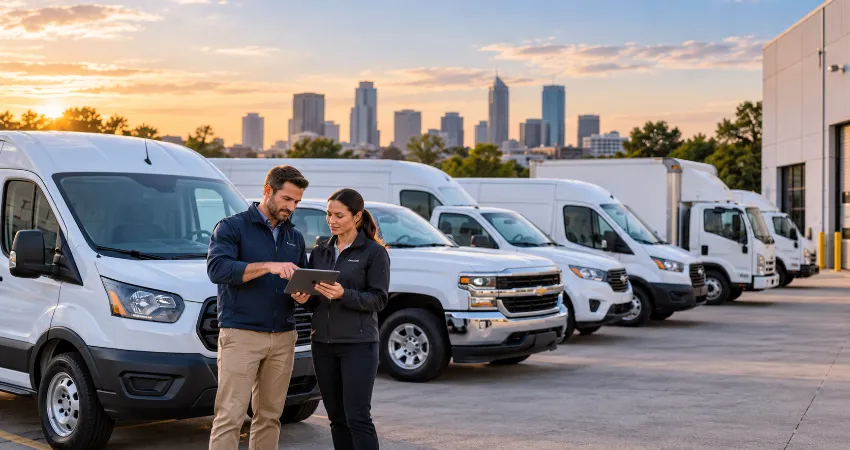
Managing a company fleet involves much more than purchasing vehicles and assigning drivers. Every vehicle creates financial exposure when it is driven for deliveries, service calls, client visits, transportation, or other business activities. A serious accident can create repair costs, medical expenses, legal claims, lost operating time, and damage to valuable company property. Commercial auto insurance helps businesses transfer part of that financial risk to an insurer.
The right policy, however, is not simply the cheapest policy covering every vehicle on a list. Fleet managers should consider who drives the vehicles, where they travel, what they carry, how many miles they accumulate, and what would happen financially if several vehicles were damaged or temporarily unavailable. Understanding the available commercial auto insurance options makes it easier to build protection around the company’s actual operating risks.
What Is Commercial Fleet Auto Insurance?
Commercial fleet auto insurance is business vehicle coverage designed for organizations operating multiple automobiles, vans, pickups, trucks, or other vehicles. Instead of managing completely separate policies for every vehicle, businesses can often insure eligible vehicles under one commercial auto program.
Commercial policies are designed around business use. This distinction matters because personal auto policies may exclude or restrict certain commercial activities. Businesses that own or lease vehicles should also make sure the correct business entity is properly identified on the policy.
Commercial Auto Liability Coverage
Liability coverage is the foundation of most commercial auto programs. It can respond when an insured business or driver becomes legally responsible for bodily injury or property damage resulting from a covered vehicle accident.
A small collision can become an expensive liability claim when multiple vehicles, serious injuries, or valuable property are involved. For this reason, companies should evaluate liability limits in relation to their overall financial exposure rather than automatically choosing the lowest limit allowed by law.
Collision Coverage for Fleet Vehicles
Collision coverage generally addresses physical damage to an insured vehicle resulting from a collision with another vehicle or object, subject to the policy’s deductible and terms. Companies with newer or higher-value fleet vehicles may consider this protection especially important because replacing a damaged commercial vehicle can require significant capital.
Fleet managers should compare the vehicle’s current value, replacement cost, deductible, and expected remaining service life. Carrying extensive physical damage coverage on an aging vehicle with limited value may not always produce the same benefit as carrying it on a newer service van or specialized company truck.
Comprehensive Coverage
Comprehensive coverage generally protects insured vehicles against certain non-collision losses. Depending on policy terms, covered events can include theft, vandalism, fire, hail, flooding, falling objects, and other specified causes of damage.
This coverage deserves particular attention when vehicles remain outdoors overnight, contain expensive installed equipment, or operate in areas exposed to severe weather or theft. Collision and comprehensive coverage serve different purposes, so companies should evaluate them separately rather than treating physical damage protection as a single decision.
Uninsured and Underinsured Motorist Coverage
A company driver can be involved in an accident caused by another motorist who has insufficient insurance. Uninsured and underinsured motorist coverage can provide protection in circumstances defined by the policy and applicable state law.
Requirements and available limits vary between states. Businesses operating vehicles across multiple jurisdictions should therefore review these provisions carefully with a licensed insurance professional instead of assuming one state’s rules apply everywhere their fleet travels.
Hired and Non-Owned Auto Coverage
One frequently overlooked fleet exposure involves vehicles the company does not own. Employees may occasionally use personal vehicles for company errands, while the business may rent or lease vehicles for temporary needs.
Hired auto coverage can address qualifying rented or hired vehicles, while non-owned auto coverage can help address liability arising from qualifying vehicles used for business but not owned by the company. These protections can be particularly relevant to businesses where employees regularly travel between job sites or visit customers in their own vehicles.
Medical Payments and Personal Injury Protection
Depending on state law and policy structure, commercial auto policies may offer medical payments coverage, personal injury protection, or similar benefits. These coverages may help pay qualifying medical expenses following an accident without relying entirely on the determination of responsibility.
Because state insurance systems differ substantially, companies should confirm which coverage is required, optional, or unavailable where their vehicles are registered and operated.
Federal Requirements for Certain Commercial Motor Carriers
Businesses operating regulated motor carriers should not assume that ordinary state commercial auto requirements are sufficient. The Federal Motor Carrier Safety Administration establishes minimum financial responsibility requirements for certain interstate motor carriers under federal regulations.
The applicable requirement can depend on the type of operation, vehicle, passengers, cargo, and other factors. Some carriers must also maintain specific insurance filings with the FMCSA. Companies involved in interstate trucking or passenger transportation should verify their exact regulatory category before establishing insurance limits.
How Fleet Insurers Evaluate Risk?
Vehicle count is only one part of fleet underwriting. Insurers may examine vehicle types, operating territory, annual mileage, driver history, accident frequency, claim severity, vehicle use, cargo, maintenance procedures, and management practices.
From a practical fleet-risk perspective, one of the most useful exercises is reviewing losses by cause instead of looking only at the total amount paid in claims. Repeated backing incidents, distracted driving events, preventable parking damage, or accidents involving particular routes can reveal operational problems that insurance alone cannot solve.
Using Telematics and Driver Data
Modern fleet operators increasingly use telematics to understand how vehicles are being driven. Depending on the system, data may include mileage, speed patterns, hard braking, rapid acceleration, location, time of travel, and other driving indicators.
This information can support driver coaching, route planning, maintenance scheduling, and accident prevention. Some insurers may also consider driving data in their underwriting or usage-based insurance programs. Businesses should establish clear internal policies explaining how driver data is collected and used.
How to Control Commercial Fleet Insurance Costs?
Reducing fleet insurance costs should begin with reducing risk rather than simply reducing coverage. A structured driver qualification process, regular motor vehicle record checks, preventive maintenance, documented safety training, accident reporting procedures, and telematics-based coaching can strengthen the overall fleet program.
Companies can also evaluate deductibles, vehicle values, optional coverage, annual mileage, and unused vehicles before renewal. Maintaining accurate records helps an insurer understand the business instead of pricing the account based on incomplete or outdated information.
How to Compare Fleet Insurance Options?
When comparing policies, companies should look beyond the annual premium. Examine liability limits, deductibles, physical damage terms, hired and non-owned auto protection, exclusions, driver restrictions, geographic limitations, claims handling, and available risk-management services.
A useful comparison places competing proposals side by side using identical coverage categories. A lower premium can become expensive if the policy contains substantially higher deductibles or leaves an important fleet exposure uninsured.
FAQs About Commercial Fleet Auto Insurance
1. How many vehicles are needed to qualify for fleet insurance?
There is no universal vehicle count that applies to every insurer. Each insurance company can establish its own eligibility rules for fleet programs. A business with several vehicles should discuss both fleet and standard commercial auto arrangements with an agent or broker to determine which structure fits its operation.
2. Does a personal auto policy cover a company vehicle?
A personal policy should not automatically be relied upon for a vehicle primarily owned or used by a business. Commercial activities may fall outside personal policy terms or be subject to restrictions. Vehicles titled to a company generally require coverage structured for the business exposure.
3. Are employees covered when driving company vehicles?
Employees may be covered when they are authorized drivers operating covered vehicles within the scope of the policy, but coverage depends on the contract. Businesses should maintain current driver lists and confirm any age, licensing, or driver-specific restrictions with their insurer.
4. What happens when an employee uses a personal car for company business?
The employee’s personal insurance may respond first in some situations, but the business can still face liability exposure. Non-owned auto coverage can help address qualifying business liability involving employee-owned vehicles. Companies with frequent employee travel should discuss this exposure specifically when designing coverage.
5. Should older fleet vehicles have collision and comprehensive coverage?
Not necessarily. The decision should consider the vehicle’s current value, deductible, replacement cost, financing requirements, and the company’s ability to absorb a loss. Removing physical damage coverage can reduce premiums, but it also means the company may need to fund repairs or replacement itself.
6. Does commercial auto insurance cover tools or products inside a vehicle?
Standard vehicle physical damage coverage should not be assumed to insure every item transported inside the vehicle. Tools, inventory, equipment, and customer property may require other business coverage. Companies should identify what vehicles regularly carry and confirm how those assets are insured.
7. Can driver safety programs reduce fleet insurance costs?
Strong safety programs can improve a company’s risk profile and reduce accident frequency over time. Driver screening, training, maintenance programs, accident reviews, and telematics can provide insurers with evidence that fleet risk is actively managed. Actual premium impact depends on the insurer and loss history.
8. What deductible should a fleet choose?
The appropriate deductible depends on cash flow, vehicle values, claim frequency, and risk tolerance. A larger deductible may reduce premium but requires the company to absorb more of each covered loss. Businesses should model several realistic accident scenarios before selecting a deductible solely for premium savings.
9. Are commercial fleet insurance requirements the same in every state?
No. State insurance and financial responsibility requirements differ, and federally regulated motor carriers can face additional obligations. Businesses operating across state lines should review both state requirements and any federal rules applicable to their particular transportation activities.
10. How often should a company review its fleet insurance?
A complete review should normally occur before each renewal and whenever operations change materially. Adding new vehicle types, expanding into new states, hiring more drivers, changing cargo, acquiring another business, or substantially increasing mileage can change the company’s exposure and should prompt an insurance review.
Conclusion
Commercial auto insurance for company fleets works best when coverage follows real operating risks. Liability, collision, comprehensive, uninsured motorist protection, hired auto, non-owned auto, and other options each address different exposures. The appropriate combination depends on the vehicles, drivers, locations, business activities, and regulatory obligations involved.
Companies can make stronger insurance decisions by combining appropriate coverage with disciplined driver screening, maintenance, safety training, claims analysis, and accurate fleet records. Reviewing these factors before every renewal helps create a fleet insurance program that protects both company vehicles and the financial stability of the business.