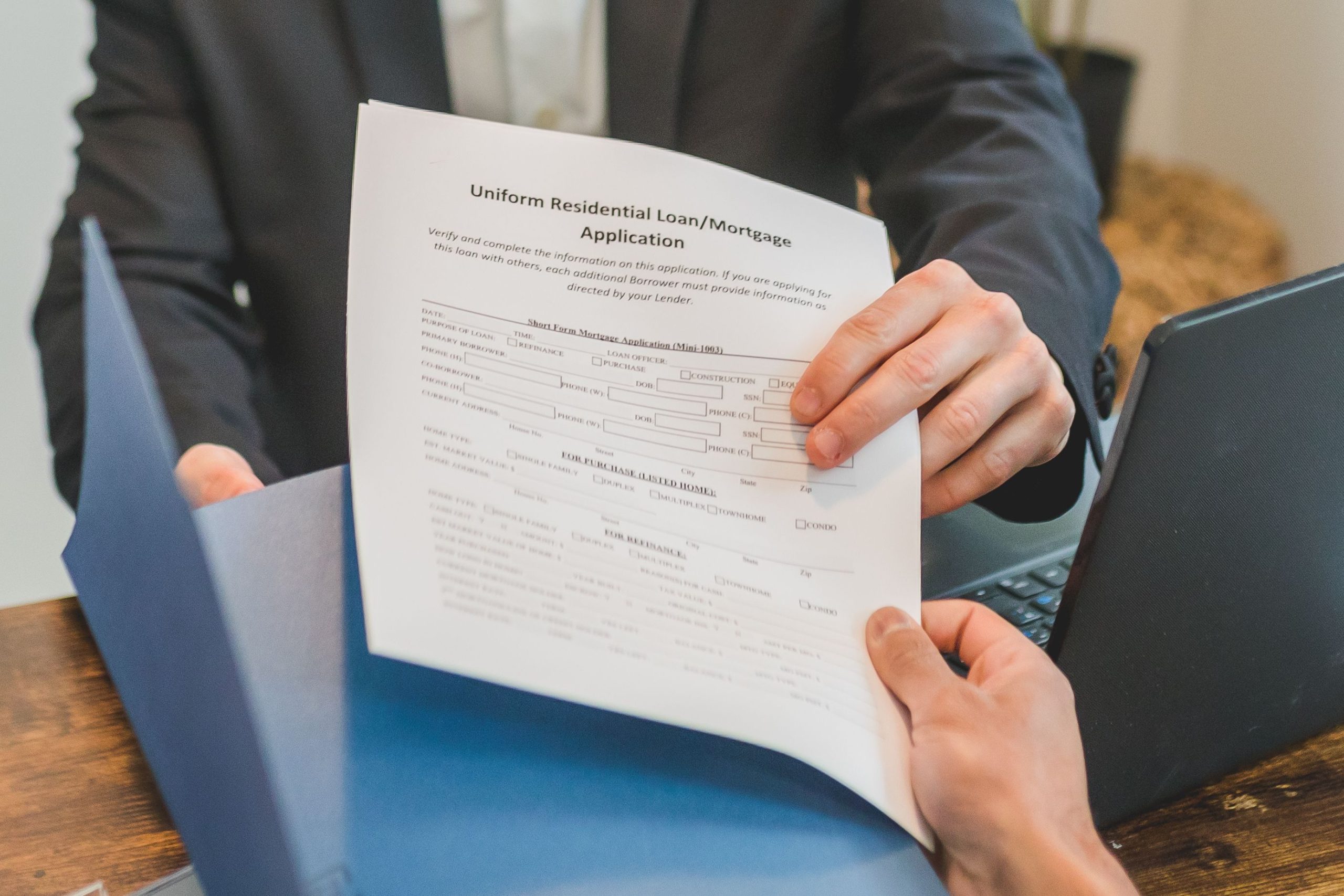
Applying for financing is one of the biggest moments in the life of a small business. Whether you need working capital, new equipment, extra inventory or funds to buy another company, a well-prepared file is often the difference between a fast approval and months of back-and-forth. This business loan application checklist walks you through every document, number and narrative a lender expects to see, so you can submit a complete, confident application the first time.
Most delays in business lending have nothing to do with a bad business. They happen because a borrower is missing a tax return, sends a stale profit and loss statement, or can’t explain exactly how the money will be used. Preparation removes those obstacles. Work through the sections below in order, tick off each item, and you will walk into your lender’s office (or onto their online portal) looking like the low-risk borrower they want to fund.
Why Preparation Matters Before You Apply
Lenders are not just reading your paperwork; they are judging how organised you are. A tidy, consistent application signals that the business is well run. A messy one raises questions, and every question adds days to underwriting.
Most banks and credit unions assess borrowers using the “5 Cs of Credit”:
- Character – your credit history, reputation and track record of repaying debts.
- Capacity – your cash flow and ability to cover repayments.
- Capital – how much of your own money is invested in the business.
- Collateral – assets that can secure the loan if things go wrong.
- Conditions – the purpose of the loan, the loan amount and the wider economic and industry climate.
Every item on this checklist feeds into one or more of these five areas. Keep them in mind as you prepare, and frame your application to answer each one before the lender has to ask.
Step 1: Define Your Loan Purpose and Amount
Before you collect a single document, get clear on two questions: How much do you need, and what exactly will you spend it on?
“Growing the business” is too vague for any underwriter. Instead, break the request down line by line:
- £/$40,000 for a new delivery van
- £/$25,000 for seasonal inventory
- £/$15,000 for marketing and a website rebuild
- £/$10,000 working capital buffer
This use-of-funds statement shows that you have thought carefully about the money and that every pound or dollar will generate a return. It also helps you match the right product to the need:
- Term loans – best for one-off investments such as expansion, renovation or acquisitions.
- Equipment financing – the equipment itself usually acts as collateral.
- Business lines of credit – flexible working capital for uneven cash flow.
- Invoice financing – unlocks cash tied up in unpaid customer invoices.
- Government-backed loans – such as SBA 7(a) loans in the US or British Business Bank-supported schemes in the UK, which often offer longer terms and lower rates in exchange for more paperwork.
Borrowing too much makes repayments harder to justify; borrowing too little can leave a project half-finished. Ask for what you can clearly justify.
Step 2: Check Your Personal and Business Credit
Your credit profile is usually the first filter a lender applies. Pull your reports before the lender does, so there are no surprises.
Personal credit checklist:
- Download your personal credit reports from all major credit bureaus.
- Dispute any errors, such as accounts that aren’t yours or paid debts still showing as open.
- Pay down revolving balances to lower your credit utilisation.
- Avoid opening new credit lines in the months before you apply.
As a general guide, many traditional banks prefer a personal score of around 680 or higher for term loans, while online lenders may accept scores in the 550–600 range in exchange for higher interest rates. If your score is below roughly 650, it can be worth spending three to six months improving it before you apply.
Business credit checklist:
- Make sure your business has its own credit file (for example, a D&B D-U-N-S Number in the US, or a Companies House-registered entity with a trade credit history in the UK).
- Check that suppliers and vendors report your on-time payments.
- Keep business and personal finances in separate bank accounts.
Some US lenders, particularly for SBA loans, also look at a combined score such as the FICO SBSS, which blends personal credit, business credit and financial performance. Strong numbers in all three areas give you more options and better pricing.
Step 3: Gather Your Core Financial Documents
This is the heart of any business loan application checklist. Lenders want to see where your business has been and where it is heading. Missing or outdated financials are the single most common cause of delay, so collect everything in one folder before you start.
Business financial documents:
- Business tax returns for the last 2–3 years.
- Profit and loss (income) statement – year-to-date, ideally no more than 90 days old.
- Balance sheet – current, showing assets, liabilities and equity.
- Cash flow statement – actual cash in and out over recent months.
- Business bank statements – usually the last 6–12 months.
- Accounts receivable and accounts payable ageing reports – who owes you, and who you owe.
- Business debt schedule – every existing loan, lease, credit card and line of credit, with balances, monthly payments, interest rates and maturity dates.
Personal financial documents (for each major owner):
- Personal tax returns for the last 2–3 years.
- Personal financial statement listing personal assets, liabilities and net worth (in the US, SBA Form 413 is commonly used).
- Personal bank statements, if requested.
Tip: Make sure the numbers match across documents. Underwriters compare your tax returns, bank statements and management accounts side by side. If revenue on your P&L is very different from deposits in your bank account, prepare a short written explanation.
Step 4: Calculate the Numbers Lenders Care About
You don’t need to be an accountant, but you should know the key ratios a lender will calculate. Running them yourself lets you spot weak points and fix them before you apply.
Debt Service Coverage Ratio (DSCR)
The DSCR is arguably the most important number in business lending. It measures whether your business generates enough cash to cover its debt repayments.
DSCR = Net operating income ÷ Total annual debt payments
For example, if your business earns $150,000 in net operating income and your total annual debt payments (including the new loan) would be $120,000:
DSCR = 150,000 ÷ 120,000 = 1.25
Most lenders want to see a DSCR of at least 1.25, meaning you earn $1.25 for every $1.00 of debt you owe. If your ratio is marginal, consider paying down existing debts, reducing the loan amount, or extending the repayment term to lower monthly payments.
Other ratios worth checking
- Debt-to-equity ratio – how much of the business is funded by debt versus owner investment.
- Current ratio – current assets divided by current liabilities; above 1.0 suggests you can meet short-term obligations.
- Profit margins – stable or rising margins reassure lenders that growth is healthy.
Stress-test your projections
Show the lender you can still make repayments if things don’t go to plan. A simple scenario showing what happens if sales fall 20% below forecast demonstrates realism, and often builds more trust than an overly optimistic projection.
Step 5: Prepare Your Legal and Business Documents
Lenders need proof that your business legally exists, is properly registered and is allowed to operate. Gather these early, as some can take time to obtain.
- Business registration or formation documents – articles of incorporation, certificate of incorporation, articles of organisation (LLC) or partnership agreement.
- Operating agreement or bylaws, showing ownership percentages.
- Business licences and permits relevant to your industry and location.
- Tax identification number (EIN in the US, UTR/company number in the UK, or local equivalent).
- Commercial lease agreement for your premises.
- Major contracts with customers or suppliers that support your revenue forecasts.
- Franchise agreement, if you operate a franchise.
- Purchase agreement, if the loan is to buy a business, property or major asset.
- Government-issued photo ID for all owners and guarantors.
- Owner résumés showing relevant management experience.
Double-check that your industry classification code is correct on every form. A small mistake here can trigger delays or even an automatic decline with some lenders.
Step 6: Write a Strong Business Plan and Loan Narrative
Even established businesses benefit from a concise business plan. For startups and government-backed loans, it is usually essential.
Your plan should cover:
- Executive summary – who you are, what you do and why you need the loan.
- Company overview – history, legal structure, ownership and key milestones.
- Market analysis – your target customers, local demand and main competitors.
- Management team – the experience and qualifications of the people running the business.
- Marketing and sales strategy – how you win and keep customers.
- Financial projections – at least 12 months of monthly cash flow projections (often required for new businesses), plus annual forecasts for two to three years.
- Use of funds – exactly how every part of the loan will be spent and how it will generate a return.
Alongside the plan, prepare a short loan narrative – a one-page cover letter that answers three questions:
- Why does the business need this money?
- Why is now the right time?
- How will you repay it?
If your history includes a weak year, a dip in revenue or a past credit issue, address it honestly here. Lenders respond far better to a clear explanation than to discovering a problem on their own.
Step 7: Identify Collateral and Guarantees
Many secured business loans require collateral, which gives the lender something to recover if the loan is not repaid. Prepare a list of assets you could offer, with estimated values and supporting evidence.
Common forms of collateral:
- Commercial or residential real estate
- Vehicles and equipment
- Inventory
- Accounts receivable
- Cash savings or investment accounts
Collateral checklist:
- Recent valuations or appraisals for property and major equipment.
- Proof of ownership (titles, deeds, purchase invoices).
- Details of any existing liens or charges on those assets.
Be prepared for a personal guarantee as well. Many small business loans, and nearly all US SBA loans, require owners above a certain ownership threshold (typically 20% for SBA loans) to personally guarantee the debt. Understand what this means for your personal assets before you sign.
Step 8: Research and Compare Lenders
Not every lender suits every business. Banks, credit unions, online lenders, government-backed programmes and non-profit microlenders all have different risk appetites, minimum requirements and ideal loan sizes.
When comparing options, look at:
- Interest rate and APR – the APR includes fees, so it shows the true cost.
- Fees – origination, arrangement, early repayment and late payment fees.
- Repayment term – longer terms lower monthly payments but increase total interest.
- Speed of funding – online lenders may fund in days; banks and government-backed loans can take weeks.
- Eligibility criteria – minimum credit score, time in business and annual revenue.
- Collateral and guarantee requirements.
Many traditional lenders expect at least two years of operating history. If your business is younger, look at online lenders, microlenders, startup loan schemes or equipment financing instead.
Free advice is also available. In the US, SCORE mentors and Small Business Development Centres (SBDCs) can review your application before you apply. In the UK, local Growth Hubs and accountants can offer similar support.
Step 9: Avoid These Common Application Mistakes
Even strong businesses get delayed or declined for avoidable reasons. Watch out for:
- Incomplete applications – one missing document can pause underwriting entirely.
- Outdated financials – statements older than about 90 days may be rejected.
- Inconsistent figures – numbers that don’t match between tax returns, bank statements and projections.
- Mixing personal and business finances – it makes cash flow hard to verify.
- Vague use of funds – lenders want specifics, not general goals.
- Applying to too many lenders at once – multiple hard credit checks in a short period can lower your score. Ask about soft-pull prequalification first.
- Unrealistic projections – hockey-stick growth with no evidence undermines your credibility.
- Ignoring the fine print – always read covenants, fees and prepayment terms before you sign.
The Complete Business Loan Application Checklist (Printable Summary)
Use this condensed version as your final check before you submit.
Planning
- Loan purpose and exact amount defined
- Detailed use-of-funds breakdown
- Right loan type chosen
Credit
- Personal credit reports checked and errors disputed
- Business credit profile established
- Credit utilisation reduced
Financials
- 2–3 years of business tax returns
- 2–3 years of personal tax returns
- Current P&L and balance sheet (≤90 days old)
- Cash flow statement
- 6–12 months of business bank statements
- AR/AP ageing reports
- Business debt schedule
- Personal financial statement for each owner
Key ratios
- DSCR calculated (target 1.25+)
- Projections stress-tested
Legal
- Formation documents and operating agreement
- Licences and permits
- Tax ID number
- Lease, major contracts and any purchase agreement
- Photo ID and résumés for all owners
Narrative
- Business plan with 12-month cash flow projection
- One-page loan narrative / cover letter
Security
- Collateral list with valuations
- Personal guarantee understood
Lender selection
- At least three lenders compared on APR, fees and terms
Frequently Asked Questions
What documents are needed for a business loan application?
Most lenders ask for 2–3 years of business and personal tax returns, current financial statements, recent bank statements, a debt schedule, business registration documents, licences, photo ID and a business plan or use-of-funds statement. Government-backed loans usually require additional programme-specific forms.
What credit score do I need for a business loan?
Traditional banks often prefer a personal credit score of around 680 or higher. Online lenders may approve borrowers with scores in the 550–600 range, but usually at higher interest rates.
How long does it take to prepare a business loan application?
If your bookkeeping is up to date, you can gather most documents in one to two weeks. If you need to improve your credit score or reconcile your accounts first, allow two to six months.
Can a new business get a loan?
Yes, but options are narrower. Startups often use microloans, equipment financing, online lenders or government startup schemes, and they typically need a strong business plan, good personal credit and sometimes collateral or a personal guarantee.
What is a good DSCR for a business loan?
Most lenders look for a debt service coverage ratio of at least 1.25, which shows the business earns 25% more cash than it needs to cover its debt payments.
Final Thoughts
Securing business finance is far less stressful when you prepare in advance. By working through this business loan application checklist—defining your loan purpose, cleaning up your credit, organising your financial and legal documents, calculating your DSCR and presenting a clear, honest narrative—you give lenders every reason to say yes.
Start gathering your documents today, even if you don’t plan to apply for a few months. When the right opportunity comes along, you will be ready to move quickly, negotiate better terms, and get the funding your business needs to grow.