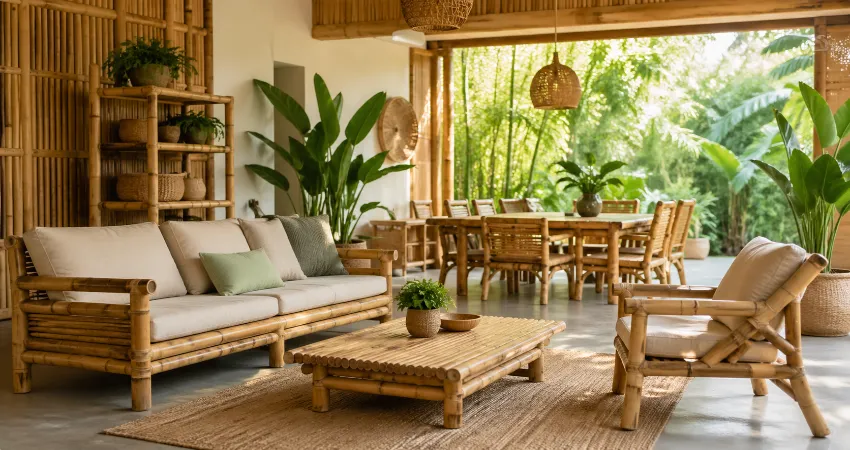
Bangladesh’s furniture industry has quietly become one of the country’s most promising export sectors — and bamboo sits at the heart of its sustainable future. The global bamboo furniture market, valued at $13.51 billion in 2025, is projected to reach $14.39 billion in 2026 at a compound annual growth rate of 6.5%, driven by increasing consumer demand for eco-friendly, low-carbon alternatives to conventional wood furniture.
Bangladesh is exceptionally well-positioned in this shift: using materials like wood, bamboo, and jute, local manufacturers create furniture that blends traditional craftsmanship with modern designs, with the country’s $2.3 billion furniture market expanding its export footprint into North America, Europe, and the Middle East.
Bamboo is one of the most remarkable natural materials available to furniture makers. It produces 35% more oxygen than comparable trees and absorbs 40% more carbon dioxide, while growing back after harvest without replanting — making it inherently renewable in a way that traditional timber cannot match.
Eco-materials: manufacturers are adopting bamboo, recycled wood, and low-impact finishes to meet eco-conscious consumer demands. Bangladesh’s combination of skilled artisan traditions, affordable labor, proximity to raw materials, and a growing investment in certification and quality assurance makes it an increasingly important source for global buyers seeking credibly sustainable bamboo furniture. This guide covers the five best sustainable bamboo furniture manufacturers in Bangladesh today.
1. Executive Woodworks Limited — Bangladesh’s Most Certified Sustainable Furniture Manufacturer
As a 100% Export-Oriented Unit (EOU) factory, Executive Woodworks proudly holds certifications such as ISO 9001:2015, Fair Trade USA, EMS ISO 14000:2015, and UL Greenguard certification. This combination of certifications is among the most comprehensive in Bangladesh’s furniture manufacturing sector and places Executive Woodworks at the top of any list of credibly sustainable producers.
The company’s commitment to sustainability is evident through the utilization of FSC-certified timbers and sustainable materials, ranging from hogla, seagrass, water hyacinth, jute, and bamboo to ceramics, bone, and both local and imported timber.
The factory’s modern manufacturing landscape includes automated processes, a kiln dry unit, sophisticated woodworking machinery, 6-axis CNC machines, automated veneer plants, robotic finishing lines, and a climatically controlled finished goods store. Notably, the factory’s scope extends beyond modern creations, embracing the revival of traditional local Cane and Rattan Furniture, fostering rural employment and catering to overseas demand.
For international buyers seeking a Bangladesh manufacturer that combines genuine certification depth with modern production capability, Executive Woodworks is the benchmark.
2. BeshiDeshi — Fair-Trade Artisan Bamboo and Cane Furniture Platform
BeshiDeshi is more than just an e-commerce platform; it is an ecosystem dedicated to supporting local artisans and empowering underserved communities, particularly women, across Bangladesh. Founded in 2018, BeshiDeshi is on a mission to bridge the gap between grassroots artisans and the global market, promoting “Made in Bangladesh” products that reflect the rich cultural heritage of the country.
BeshiDeshi’s bamboo and cane furniture range is handcrafted by skilled artisans from rural communities, with a strong emphasis on fair trade practices ensuring artisans receive fair compensation. Our platform connects skilled artisans — many of whom come from rural, low-income, or marginalized communities — to customers who are looking for authentic, handcrafted products.
BeshiDeshi’s long-term vision is to become a global sourcing hub for Bangladeshi artisanal products, positioning it as a significant emerging player for international buyers who want social impact alongside environmental sustainability in their bamboo furniture sourcing. Products include bamboo chairs, cane tables, and decorative furniture pieces sold directly to global consumers and wholesale buyers.
3. Dadabangla Natural Fiber Ltd. — High-Volume Bamboo and Natural Fiber Export Specialist
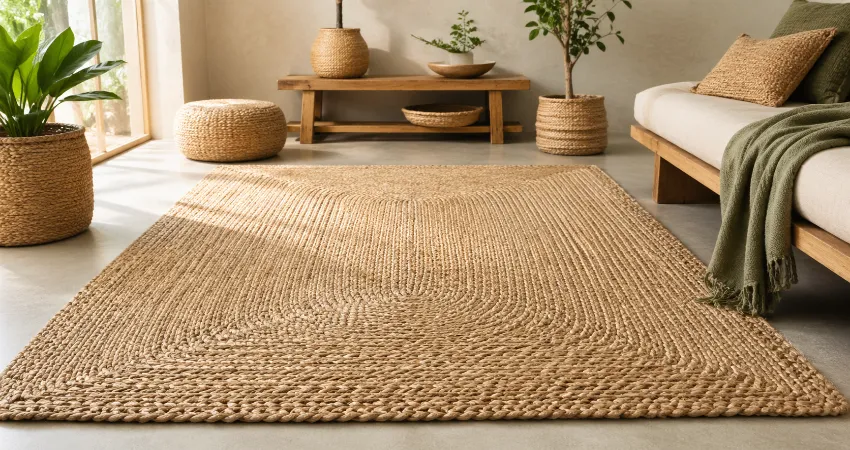
Dadabangla Natural Fiber Ltd. is one of Bangladesh’s most active export-oriented manufacturers of natural fiber products — with bamboo forming a significant part of their product range alongside jute, seagrass, and water hyacinth. The company is consistently cited in Alibaba and Accio.com sourcing platforms as a leading Bangladesh exporter of handwoven natural fiber rugs, baskets, and furniture-adjacent home products made from bamboo and related materials.
For global buyers seeking high-volume reliable supply of natural fiber and bamboo-based home products from Bangladesh, Dadabangla offers the production scale and export experience that smaller artisan operations cannot match. Their quality assurance process covers raw material selection through to finished goods inspection, and their product range is designed for the contemporary home decor market in North America, Europe, and Australia.
Furniture exports to North America, Europe, and the Middle East are increasing steadily from Bangladesh, and Dadabangla is among the manufacturers actively driving that expansion through their natural fiber product lines.
4. Jaruta Craft — Rural Women Artisan Network with Bamboo and Sustainable Materials
Bangladesh has huge facilities to make yarn and rope in different thicknesses to diversify jute fabrics and a wide range of products. Jaruta Craft works within this ecosystem, operating a network of over 50 artisan families and 600 individual artisans — most of them women — who work alongside semi-industrial facilities.
When you choose us as your handicraft exporter, you are not only getting eco-friendly products — you are also supporting fair trade practices and empowering rural women artisans across Bangladesh.
Jaruta’s bamboo product range spans furniture, home décor items, baskets, and lifestyle products made from bamboo alongside jute, seagrass, water hyacinth, and rattan. Their strong quality assurance team ensures consistency from raw material to finished goods — an important differentiator for international buyers managing supply chains across diverse artisan producers.
For buyers who want to combine bamboo furniture sourcing with meaningful social impact in rural Bangladesh, Jaruta Craft’s model — connecting artisan families directly to global markets — represents sustainable purchasing at its most complete.
5. HATIL and Bangladesh’s Branded Furniture Sector — Bamboo Integration in Modern Manufacturing
Bangladeshi furniture brands have made remarkable strides in recent years, capturing international markets with their unique designs, high-quality craftsmanship, and competitive pricing. One of the key drivers of this global expansion is the use of locally sourced materials, such as solid wood and bamboo, which are both sustainable and durable.
HATIL — recognized as a Superbrand for 2023–2024 and founded in 1975 — represents the most sophisticated end of Bangladesh’s furniture export sector. Design focus: Minimalist, elegant, and timeless designs with sustainability at the core.
While HATIL is primarily a premium wood and composite furniture brand, its integration of bamboo, sustainable materials, and eco-conscious production practices places it in the same conversation as Bangladesh’s sustainable furniture manufacturers for buyers sourcing the country’s best-quality export-ready output.
The furniture market in Bangladesh has reached a significant valuation of Tk. 25,000 crore (~USD 2.3 billion), highlighting robust growth and potential, with investments in modern design and sustainability boosting industry appeal.
As the sector evolves, HATIL’s design capability and certification infrastructure make it an important indicator of where Bangladesh’s sustainable bamboo furniture manufacturing is heading for premium global markets.
Why Bangladesh Is Growing as a Sustainable Bamboo Furniture Source?
The broader context behind these five manufacturers is a Bangladesh furniture industry actively investing in sustainability credentials, design quality, and export capacity. Eco-materials: manufacturers are adopting bamboo, recycled wood, and low-impact finishes to meet eco-conscious consumer demands.
Green Awareness: rising buyer interest in sustainable products reflects a global shift toward environmentally responsible choices. The global bamboo furniture market is growing at 6.5% CAGR through 2030, and Bangladesh — with its skilled artisan workforce, abundant natural fiber resources, competitive pricing, and increasingly rigorous certification standards — is well-positioned to capture a growing share of that expanding market.
FAQs About Best Sustainable Bamboo Furniture Manufacturers
1. Is Bangladesh a significant source of sustainable bamboo furniture for global export?
Yes and growing. Bangladesh’s $2.3 billion furniture industry is actively expanding into sustainable materials including bamboo, with export-oriented manufacturers holding internationally recognized certifications including FSC, ISO 14001, Fair Trade USA, and UL Greenguard. Exports to North America, Europe, and the Middle East are increasing steadily, with bamboo and natural fiber products forming an important part of the country’s global design offering.
2. What certifications should I look for when sourcing bamboo furniture from Bangladesh?
The most credible certifications to look for are FSC (Forest Stewardship Council) for sustainable sourcing, ISO 14001 for environmental management, Fair Trade USA for ethical labor practices, and UL Greenguard for low chemical emissions. Executive Woodworks holds all four, setting the benchmark. OEKO-TEX certification for any fabric or fiber components is also worth verifying when purchasing combined bamboo-textile products.
3. How does bamboo compare to wood as a sustainable furniture material?
Bamboo is significantly more sustainable than most timber: it grows back after harvesting without replanting, produces 35% more oxygen than comparable trees, absorbs 40% more carbon dioxide, and reaches usable maturity in 3 to 5 years versus decades for most hardwoods. It is also naturally resistant to pests, reducing pesticide needs during cultivation, and produces a material comparable in strength to many hardwoods at a fraction of the environmental cost.
4. Can I order custom bamboo furniture designs from Bangladesh manufacturers?
Yes. Most of the manufacturers listed — including Dadabangla Natural Fiber Ltd. and Executive Woodworks — offer custom design services and OEM production for international buyers. Minimum order quantities vary significantly between artisan networks like BeshiDeshi and Jaruta Craft (lower MOQ, artisan-scale) and industrial exporters like Dadabangla and Executive Woodworks (higher MOQ, commercial scale). Contact manufacturers directly to discuss design specifications and production timelines.
5. Is bamboo furniture from Bangladesh competitively priced compared to other Asian manufacturers?
Yes. Bangladesh offers competitive factory-gate pricing due to lower labor costs than China and Vietnam, while increasingly matching quality standards through certification and automation investment. The country’s combination of artisan heritage, competitive pricing, and growing sustainability credentials makes it a compelling alternative sourcing destination for buyers currently relying solely on China or Vietnam for bamboo furniture supply.
Conclusion
Bangladesh’s sustainable bamboo furniture manufacturing sector spans the full spectrum — from Executive Woodworks’ internationally certified industrial-scale export operation and HATIL’s design-forward premium market presence, to the fair-trade artisan networks of BeshiDeshi and Jaruta Craft that put women’s livelihoods and rural community empowerment at the center of every product.
The global bamboo furniture market is growing at 6.5% annually and Bangladesh is positioning itself to capture a meaningful share of that growth through investment in certifications, design quality, and export infrastructure.
For buyers seeking credibly sustainable, competitively priced bamboo furniture with a meaningful supply chain story, Bangladesh deserves serious consideration alongside the more established Asian manufacturing centers.