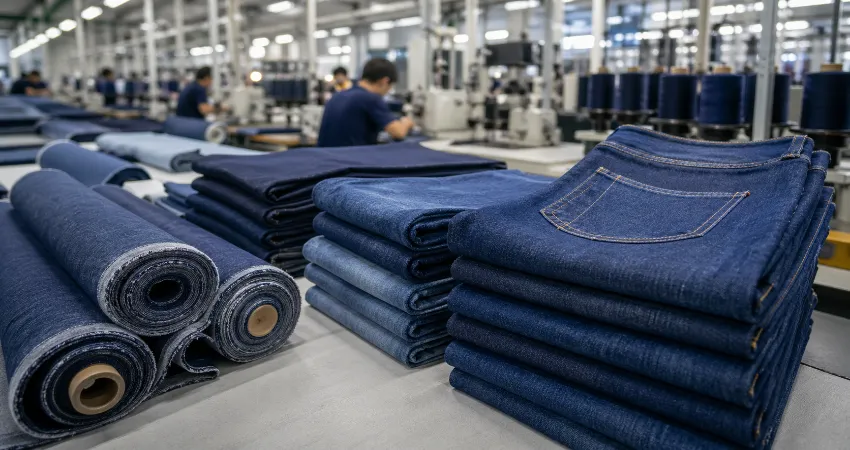
Bangladesh has quietly built one of the most formidable denim manufacturing ecosystems in the world. The country currently ranks as the second-largest garment exporter globally, and within that achievement, denim occupies a particularly prominent position.
The global jeans market is projected to reach $80 billion by 2026, and Bangladesh is feeding a substantial portion of that demand — supplying major fashion retailers across North America, Europe, Canada, and Australia.
What makes Bangladesh’s denim sector distinctive is not simply competitive pricing but the combination of vertically integrated production, advanced washing and finishing technology, and increasingly rigorous sustainability credentials that global brands now require as baseline conditions for supplier partnerships.
Choosing the right denim manufacturing partner in Bangladesh requires looking beyond production capacity alone. Certifications, R&D capability, minimum order quantities, and the depth of a factory’s washing and finishing department are all factors that separate premium suppliers from commodity producers.
This guide profiles five manufacturers that consistently appear at the top of sourcing shortlists for global fashion brands seeking high-quality denim at scale.
1. Pacific Jeans Limited — The Premium Denim Benchmark
Pacific Jeans Limited holds a reputation within Bangladesh’s apparel sector that few other manufacturers can rival: it is consistently identified as the country’s leading premium denim producer, trusted by fashion brands operating at the highest quality tier in European and North American markets.
The company controls its production chain from fabric sourcing through to final garment finishing — a vertical integration model that gives it direct authority over quality at every stage and removes the inconsistencies that arise when multiple vendors handle different parts of the process.
Pacific Jeans’ washing and finishing department is particularly noteworthy. Its capability across stone wash, acid wash, enzyme wash, and a range of specialized finish treatments allows brand buyers to achieve consistent and reproducible denim aesthetics across large production runs.
The company holds strong compliance credentials covering labor rights and environmental management, and its export footprint into European and North American markets is well-established. For brands that cannot afford quality variation at volume, Pacific Jeans represents the most reliable premium option Bangladesh has to offer.
2. Envoy Textiles Limited — World’s First LEED Platinum Denim Facility
Envoy Textiles holds a distinction that no other denim manufacturer anywhere in the world can claim: its production facility was the first denim plant globally to achieve LEED Platinum certification, awarded in 2016. That credential is not merely a marketing asset — it reflects a genuine operational commitment to energy efficiency, water conservation, and reduced chemical impact across the production process.
The facility spans 45 acres in Mymensingh and is equipped with integrated weaving, spinning, and finishing lines that handle the full denim production cycle under one operational roof.
For brands whose sustainability commitments have become non-negotiable sourcing requirements — particularly those selling into the European market where environmental transparency is increasingly regulated — Envoy Textiles provides a verifiable, internationally recognized environmental credential that most competitors cannot match.
It also delivers consistently high-quality denim fabrics and garments for international clients, making the sustainability case and the quality case simultaneously rather than asking buyers to trade one for the other.
3. Ha-Meem Group — Large-Scale Denim for Global Retail Giants
Ha-Meem Group is one of Bangladesh’s largest apparel manufacturers by production volume, operating more than 26 factories with denim and woven garments forming the core of its output. The company’s scale is its primary commercial advantage: it can handle the kind of order volumes that major global retailers — the ones ordering millions of units per season — require from a single manufacturing partner.
Ha-Meem’s denim division specifically has dedicated R&D teams focused on sustainable dyeing technologies and water-saving finishing processes, giving it a forward-looking environmental program alongside its established production infrastructure.
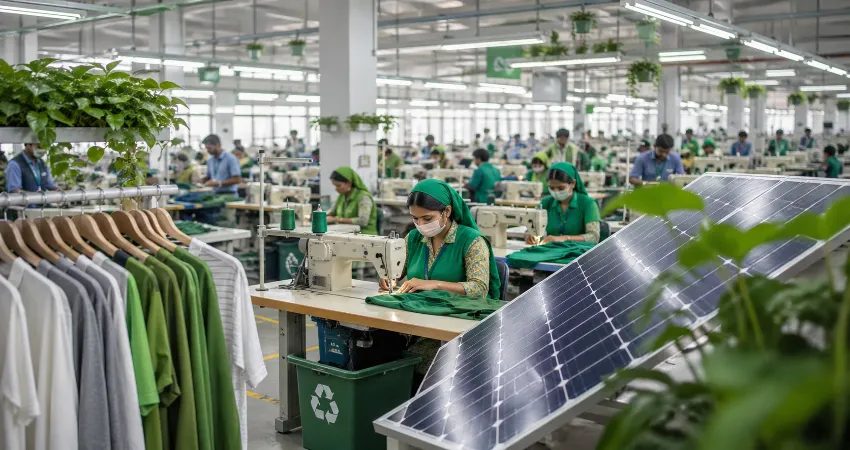
The company supplements its production capacity with investments in solar energy and water recycling systems across its factory estate, and maintains in-house training programs designed to develop and retain skilled workers.
For retail buyers prioritizing consistent quality across very large volume orders, Ha-Meem’s combination of scale, internal quality control systems, and sustainability investment positions it as a credible tier-one supplier.
4. Beximco Denims Limited — Innovation and Compliance Since 1994
Established in 1994, Beximco Denims is one of the oldest and most experienced dedicated denim manufacturers in Bangladesh, with decades of accumulated knowledge in sustainable production practices and supply chain compliance.
The company has consistently been an early adopter of environmental and social standards within the Bangladesh denim sector — a track record that international brands with long-standing ethical sourcing commitments value when selecting manufacturing partners.
Beximco Denims’ facilities are designed for innovation as well as volume: the company regularly develops new fabric constructions and finishing approaches for brand partners who need something beyond standard commodity denim.
For fashion brands that demand a manufacturer capable of both high-volume reliable production and collaborative product development, Beximco Denims’ combination of experience, compliance history, and technical capability makes it a strong candidate at the sourcing shortlist stage.
5. Nice Denim Mills Limited (SAAD Group) — Social Responsibility with World-Class Production
Nice Denim Mills Limited, part of the SAAD Group and located in Sreepur, Gazipur, takes a position in the market that distinguishes it on social grounds as much as on technical ones. The company operates Bangladesh’s largest biological effluent treatment plant — an infrastructure investment that reflects a serious commitment to wastewater management that goes beyond regulatory minimum compliance.
SAAD Group also advocates for living wages rather than simply meeting statutory minimum wage requirements, and runs a non-profit social welfare agency (IAWT) that provides housing, sanitary services, and financial support to workers and their families.
For brands whose sourcing ethics programs require demonstrated worker welfare outcomes — not just audit passes — Nice Denim’s combination of wastewater leadership, living wage commitment, and community investment provides a sourcing narrative that very few competitors can offer.
The manufacturing quality is also high, with world-class denim fabric production designed for international buyers who need both performance and provenance from their supply chain partners.
FAQs About Best High-Quality Denim Manufacturers
1. Why is Bangladesh considered a top destination for denim manufacturing?
Bangladesh combines competitive production costs with sophisticated denim technology, a workforce experienced in complex washing and finishing techniques, and a growing portfolio of internationally certified facilities. The country is the world’s second-largest garment exporter, and its denim sector specifically serves major European and North American retailers through established export infrastructure and compliance frameworks.
2. What certifications should I look for when choosing a Bangladesh denim manufacturer?
Priority certifications include LEED (environmental building performance), OEKO-TEX (chemical safety), GOTS (organic textile standards), and social compliance frameworks such as SA8000, Sedex, or Amfori BSCI. LEED Platinum — held by Envoy Textiles — represents the highest environmental standard currently achievable. Labor compliance audits through internationally recognized third-party programs provide the social dimension that environmental certifications alone do not cover.
3. What are typical minimum order quantities for premium Bangladesh denim manufacturers?
Large-scale manufacturers like Ha-Meem Group typically require minimum orders of 5,000 pieces or more per style to justify their production line setup costs. Smaller or more specialized manufacturers may accommodate lower volumes. For boutique and emerging brands with lower volume requirements, working through a buying house or consolidated order partner in Bangladesh is often the most practical route to premium manufacturing access.
4. How does Bangladesh’s denim washing and finishing capability compare internationally?
Bangladesh’s leading denim manufacturers — particularly Pacific Jeans — have invested heavily in washing and finishing technology to the point where their capabilities rival those found in Turkey, Italy, and other premium denim production centers. Stone wash, acid wash, enzyme wash, laser finishing, and ozone treatments are all available at scale. This technical depth allows global brands to achieve complex, reproducible denim aesthetics without compromising on volume or price.
5. Is denim sourcing from Bangladesh sustainable in 2026?
Increasingly yes, at the top end of the market. Envoy Textiles’ LEED Platinum facility, Nice Denim’s wastewater treatment leadership, and Ha-Meem’s solar and water recycling investments demonstrate that genuine environmental progress is happening within Bangladesh’s denim sector. Brands should focus their audits on specific factory-level credentials rather than making country-level assumptions — the gap between the sector’s best and worst environmental performers remains significant.
You May Like: Top 10 Best Authentic Jamdani Saree Vendors For Global Shipping
Conclusion
The five manufacturers profiled here — Pacific Jeans for premium quality reliability, Envoy Textiles for unmatched environmental credentials, Ha-Meem for large-scale volume, Beximco Denims for innovation and compliance depth, and Nice Denim for social responsibility leadership — represent the strongest positions currently available within Bangladesh’s denim manufacturing sector for global brand buyers.
The right choice among them depends on what a brand values most: output volume, sustainability certification, product innovation, social impact, or some combination of all four.
What all five share is the production capability and international compliance infrastructure to serve global fashion brands credibly in 2026 and beyond.