Bangladesh’s packaging industry has matured considerably over the past decade, moving well beyond basic commodity production toward technically sophisticated, export-grade solutions that serve both local and multinational clients.
The growth of sectors like ready-made garments, pharmaceuticals, food processing, and consumer goods has created a steady and expanding demand for high-quality plastic packaging — and a generation of manufacturers has risen to meet it.
Today, Bangladesh hosts dozens of companies with the production capacity, machinery, and quality control systems to serve serious industrial buyers across the region and internationally.
Sourcing plastic packaging from Bangladesh offers a combination of competitive pricing, growing technical capability, and proximity to South Asia’s largest manufacturing hubs. The country’s packaging sector draws on domestic polymer supply chains, imported raw materials, and an increasingly skilled manufacturing workforce.
For industrial procurement teams, this guide covers the ten most significant plastic packaging suppliers currently operating in Bangladesh — who they are, what they produce, and what makes each one relevant to different sourcing requirements.
1. National Polymer Industries PLC — Bangladesh’s Largest Plastic Manufacturer
National Polymer Industries PLC sits at the top of Bangladesh’s plastic and packaging sector by revenue, generating approximately $274.2 million annually according to February 2026 industry data — making it the undisputed market leader in the country by a significant margin.
Founded in 1987, the company has built a portfolio that stretches from water tanks and plastic pipes to furniture and doors, all while maintaining a strong industrial packaging capability.
For buyers seeking a supplier with the financial stability, production scale, and long operational track record to handle large-volume industrial packaging contracts reliably, National Polymer’s position in the market is hard to match.
2. Premiaflex Plastics Limited — Flexible Packaging for Multinationals
Premiaflex Plastics Limited, a subsidiary of ACI PLC incorporated in 2009, operates from a dedicated factory in Gazipur and has built a client list that reads like a who’s who of global consumer brands — including Unilever, Nestlé, GlaxoSmithKline, Reckitt Benckiser, Marico, PepsiCo, and Godrej, among others.
The company specializes in flexible packaging using fully automated Rotogravure printing technology and produces printed laminates with foil, film, and paper combinations.
Its five-layer film-making machine, ten-color printing capability, and state-of-the-art quality control laboratory position it as the strongest supplier in Bangladesh for brands requiring technically demanding flexible packaging with consistent quality verification. The facility also supplies UniQlo Japan, demonstrating its credentials with export-grade buyers.
3. Q Pail Ltd — Specialist in Industrial Rigid Containers Since 1992
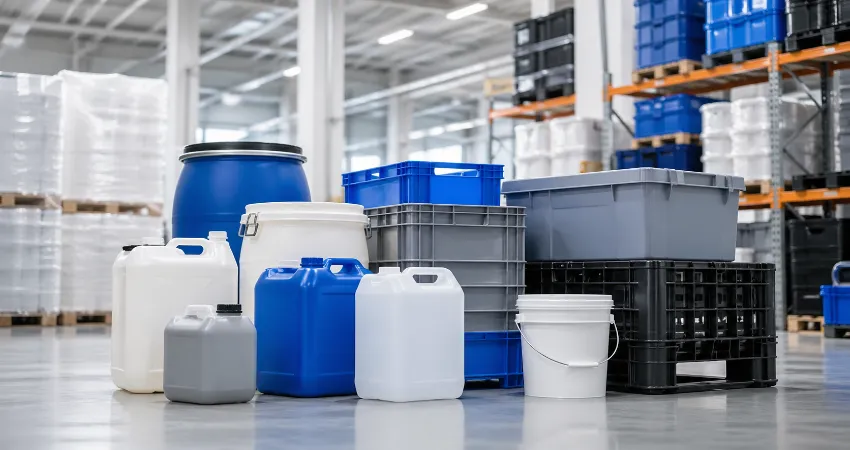
Q Pail Ltd has spent more than three decades building expertise in one specific and commercially important area of plastic packaging: rigid industrial containers. The company manufactures plastic pails, jerry cans, and barrels designed for industrial applications where structural integrity, chemical resistance, and seal performance matter considerably more than aesthetics.
Operating since 1992, Q Pail brings the kind of production consistency and product knowledge that buyers in chemical, paint, lubricant, and agricultural industries rely on when specifying rigid packaging. Its focused product range and long operational history make it a credible specialist source for industrial container requirements that generalist packaging manufacturers typically handle less well.
4. Akij Plastics Limited — Virgin Material Industrial Packaging with German Technology
Akij Plastics Limited, part of the Akij Group — one of Bangladesh’s largest and most diversified conglomerates — manufactures plastic products using 100% virgin polymer materials processed on imported German machinery.
This combination matters to industrial buyers for a specific reason: virgin material input, combined with precision European equipment, produces packaging with more consistent mechanical properties than products manufactured with recycled or mixed-grade resin.
For pharmaceutical, food-grade, or industrial chemical packaging where contamination risk and dimensional consistency are critical specifications, Akij Plastics’ commitment to virgin material and advanced machinery represents a meaningful quality differentiator within the Bangladesh market.
5. Packman Bangladesh Ltd — Flexible Poly Bags for Garment and Textile Sourcing
Packman Bangladesh Ltd (PBL) was established in 1997 and has built a specific and well-regarded niche in the Bangladesh packaging market: flexible poly bag manufacturing for clothing and home textile industries. The company’s client base is predominantly garment exporters and textile manufacturers, for whom polybag packaging is a volume, consistency, and compliance requirement rather than a design priority.
PBL integrates OXO-Biodegradable technology into its production, giving it a defensible position as the Bangladesh garment sector’s sourcing requirements shift toward reduced-plastic and more accountable packaging solutions.
For industrial buyers serving the RMG supply chain who need a high-volume, technically compliant poly bag partner, Packman is among the most established options in the country.
6. Dutch-Bangla Pack — Third-Largest by Revenue, Broad Industrial Portfolio
Dutch-Bangla Pack ranks third in Bangladesh’s plastics and packaging sector by revenue, generating approximately $50.9 million annually. The company’s name reflects a historical partnership framework that brought European technical standards into the Bangladesh market, and its industrial packaging range spans several product categories that make it relevant to buyers across multiple sectors.
Its size and revenue position give it the production infrastructure and operational capacity to handle steady, large-volume supply relationships — an important consideration for industrial procurement teams who need packaging supply continuity rather than ad hoc orders from smaller manufacturers.
7. Kalyar Replica Limited / Kalyar Packaging Ltd — Flexible Printing and Corrugated Solutions
Kalyar Replica Limited and its associated entity Kalyar Packaging Ltd operate across both flexible printing and corrugated packaging categories, offering multinational and local clients a consolidated packaging supply relationship that covers multiple material formats.
The company’s focus on quality verification and on-time delivery has established it as a reliable partner for brands that need packaging supply managed with commercial precision rather than artisan-scale informality.
For industrial buyers who want to consolidate flexible and corrugated packaging supply under a single credible Bangladesh-based vendor, Kalyar’s dual capability across both formats is a practical advantage worth evaluating.
8. Navana Engineering Limited — HDPE and uPVC Industrial Packaging Products
Navana Engineering Limited (NEL), a subsidiary of the Navana Group, brings industrial-grade polymer manufacturing capability to the Bangladesh packaging market through its production of high-density polyethylene (HDPE) and un-plasticized polyvinyl chloride (uPVC) products.
While the company operates across a broader engineering product portfolio, its plastic manufacturing capacity and commitment to international quality standards make it a relevant supplier for industrial buyers whose packaging specifications call for HDPE containers, tanks, or protective casings.
The Navana Group’s size and diversified conglomerate backing also means the company brings financial stability and operational scale that smaller packaging specialists cannot always match.
9. Total Pack — Flexible Packaging Machinery and Materials with Two Decades of Experience
Total Pack is a packaging sector specialist with approximately twenty years of operation in the Bangladesh market, serving the plastic, printing, and packaging industry with both machinery solutions and packaging materials.
Its dual role as both equipment supplier and materials provider gives it a distinctive position in the market: companies working with Total Pack on machinery procurement often develop long-term materials supply relationships with the same vendor, creating integration efficiencies that single-product suppliers cannot offer.
For industrial buyers setting up new packaging operations in Bangladesh or expanding existing lines, Total Pack’s combined equipment and materials capability is worth serious consideration alongside pure packaging manufacturers.
10. EcoVia Ltd — Compostable and Biodegradable Packaging, Bangladesh’s Clean-Tech Answer
EcoVia Ltd represents the most forward-looking segment of Bangladesh’s packaging industry: compostable and biodegradable alternatives to conventional plastic packaging. The company uses an innovative approach, producing compostable packaging solutions — including shopping bags and apparel packaging — from clothing waste generated by Bangladesh’s enormous garment manufacturing sector.
This circular model converts a low-value waste stream into packaging material, simultaneously reducing textile waste and offering industrial buyers a verifiable alternative to single-use plastic packaging.
For procurement teams whose brands have made public plastic reduction commitments or who source for markets with incoming single-use plastic regulations, EcoVia offers a Bangladesh-based solution that aligns supply chain sustainability with local industrial innovation.
You May Like: Top 10 Best Eco-Friendly Jute Rugs From Bangladesh For Modern Homes
Understanding Bangladesh’s Plastic Packaging Market in 2026
Bangladesh’s packaging industry sits at a genuinely interesting inflection point heading into 2026. On one side, e-commerce growth is creating surging demand for protective packaging across almost every product category.
On the other, regulatory pressure — both domestic and from export destination markets in Europe and North America — is pushing manufacturers toward biodegradable alternatives and more transparent supply chains.
The result is a market where conventional plastic packaging suppliers are investing in certifications and quality systems to retain multinational clients, while a new generation of clean-tech packaging startups is building alternatives from Bangladesh’s own waste streams.
Both trajectories create opportunity for industrial buyers who take the time to understand the supplier landscape properly before committing to sourcing relationships.
FAQs About Best Industrial Plastic Packaging Suppliers
1. What types of plastic packaging are most commonly sourced from Bangladesh?
Flexible laminates and printed packaging are the highest-volume category, driven by garment, food, and consumer goods industries. Rigid containers including pails, jerry cans, and bottles serve chemical, pharmaceutical, and agricultural sectors. Poly bags for garment packaging represent another major volume category. Bangladesh’s technical capability is strongest in flexible packaging, where companies like Premiaflex serve multinational brands with export-grade output.
2. How do I verify the quality standards of a plastic packaging supplier in Bangladesh?
Request ISO certification documentation — particularly ISO 9001 for quality management and ISO 14001 for environmental management where relevant. Ask for evidence of third-party audits, references from current multinational clients, and a factory visit where possible. For food-grade or pharmaceutical packaging, verify compliance with relevant food contact regulations. Bangladesh’s larger suppliers increasingly hold internationally recognized certifications that can be independently verified.
3. Is biodegradable plastic packaging available from Bangladesh-based suppliers?
Yes, and it is a growing category. Companies including EcoVia Ltd and Green Poly Bangladesh produce compostable and biodegradable alternatives to conventional plastic packaging. EcoVia’s approach — manufacturing compostable packaging from garment industry textile waste — is particularly notable for buyers whose sustainability commitments require supply chain circularity rather than just material substitution. Packman Bangladesh also integrates OXO-Biodegradable technology into its poly bag production.
4. What are typical minimum order quantities for industrial plastic packaging from Bangladesh?
Minimum order quantities vary significantly by product type and supplier scale. Large manufacturers like National Polymer and Premiaflex Plastics typically set MOQs aligned with their automated production line minimums — often measured in thousands of units or hundreds of kilograms. Smaller or mid-sized suppliers may accommodate lower volumes. For initial sourcing discussions, contacting suppliers directly with your specific product specifications and estimated volume is always the most productive starting point.
5. Can Bangladesh plastic packaging suppliers meet export-grade international standards?
The largest suppliers can and do. Premiaflex Plastics supplies multinational brands including Unilever, Nestlé, and Reckitt Benckiser with export-quality flexible packaging, demonstrating the sector’s capability at the top end. National Polymer and Akij Plastics also operate with quality systems appropriate for international supply chains. The critical factor is supplier selection — Bangladesh’s packaging market spans both internationally certified manufacturers and basic domestic producers, and thorough due diligence during the shortlisting process is essential.
Conclusion
Bangladesh’s industrial plastic packaging sector offers genuine sourcing depth in 2026 — from the scale and financial stability of National Polymer Industries at the market’s top end, through Premiaflex’s multinational-client flexible packaging expertise, to Q Pail’s three-decade specialist focus on rigid industrial containers and EcoVia’s innovative compostable alternatives built from textile waste.
The country’s combination of competitive manufacturing economics, growing technical capability, and proximity to South Asian demand centers makes it a legitimate option for industrial procurement teams willing to invest the time in proper supplier qualification.
Whether the requirement is flexible laminates, rigid containers, specialty poly bags, or next-generation biodegradable alternatives, the Bangladesh packaging sector has established suppliers capable of delivering each.