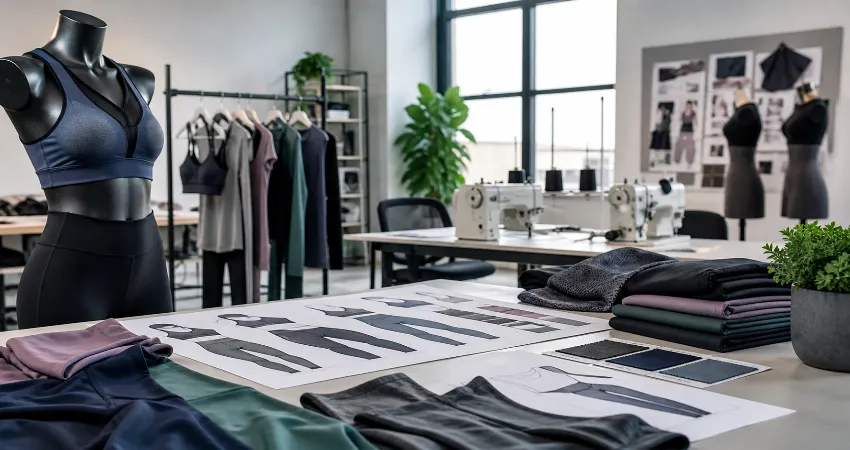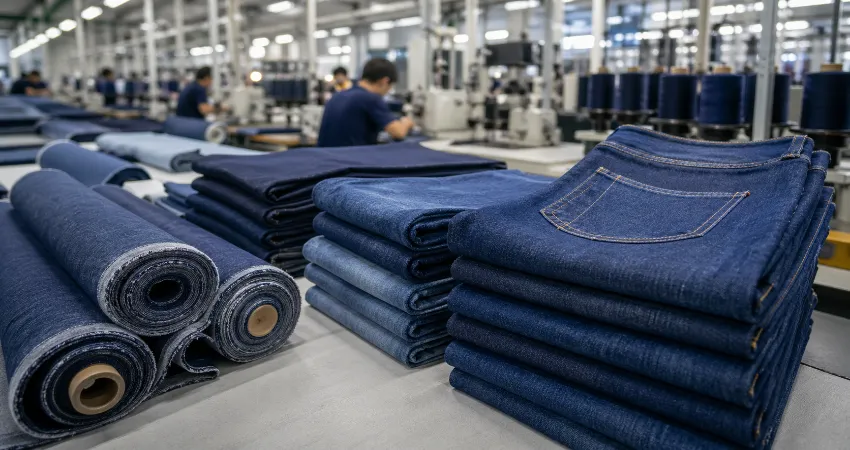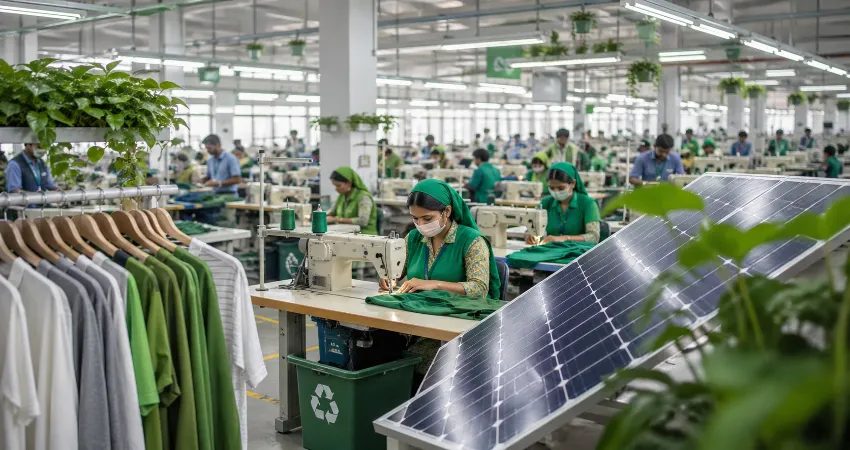
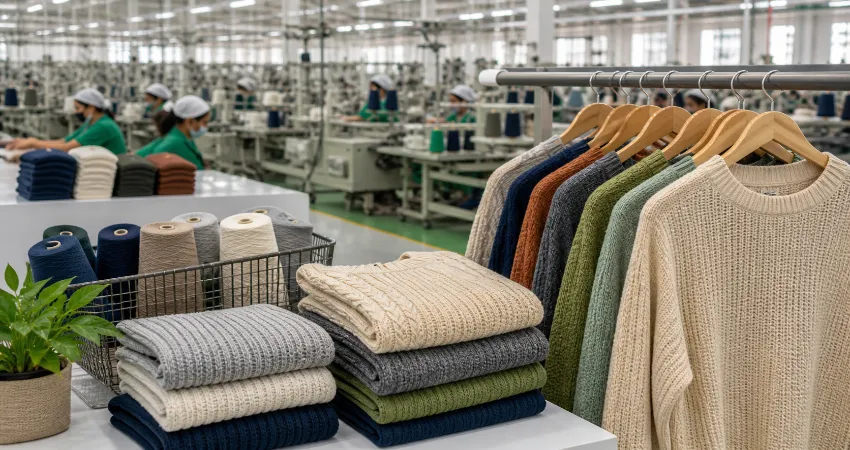
Bangladesh holds the second position globally in ready-made garment exports, and within that achievement, knitwear is the category that earns the largest share of foreign currency. The country exports knitwear covering t-shirts, polo shirts, hoodies, sweatshirts, leggings, sportswear, and children’s apparel to buyers across the European Union, United States, United Kingdom, and increasingly across the Middle East and East Asia.
The RMG sector as a whole contributes more than 80% of Bangladesh’s total export revenue and directly employs over four million workers — the majority of them women. For international brands placing bulk orders, the combination of skilled labor, competitive factory-gate pricing, and rapidly improving compliance infrastructure makes Bangladesh’s knitwear suppliers difficult to ignore.
Choosing a bulk-order knitwear partner in Bangladesh requires looking at production capacity, compliance certifications, product specialization, and supply chain integration. This guide profiles ten suppliers that consistently appear in bulk-order sourcing conversations for global brands — each with a distinct position in the market.
1. DBL Group — Vertically Integrated Knitwear Leader with GOTS Certification
DBL Group has built one of the most complete vertical supply chains in Bangladesh’s knitwear sector — covering yarn production, knitting, dyeing, finishing, and garment manufacturing within a single ownership structure.
The group holds GOTS certification for organic cotton production, making it particularly relevant for brands selling into European markets where organic fiber verification is increasingly mandatory.
Its sustainable textile operations and strong compliance record have made it a preferred supplier to international retailers who require both volume capacity and verifiable environmental credentials from the same partner.
2. Epyllion Group — Three Decades of Knitwear Excellence
With more than thirty years of continuous operation in the textile business, Epyllion Group has accumulated the kind of institutional knowledge that newer manufacturers cannot shortcut. The group produces knitwear alongside woven apparel and home textiles, and maintains a sustained focus on sustainability that has made it a go-to supplier for established brands in Europe and North America.
Its longevity in the sector means it has navigated multiple buyer requirement cycles — from basic compliance to full ESG reporting — and has infrastructure capable of handling both seasonal and year-round bulk supply relationships.
3. Plummy Fashions Limited — One of the World’s Greenest Knitwear Factories
Plummy Fashions holds a rare distinction in global knitwear manufacturing: it is consistently cited among the world’s most environmentally advanced garment factories. The facility operates on rooftop solar panels, uses a wastewater treatment plant, and maintains energy efficiency standards that earn it recognition beyond Bangladesh’s borders.
For brands whose sustainability commitments require factory-level environmental verification rather than material-only certifications, Plummy’s operational green infrastructure provides a sourcing narrative that very few competitors anywhere in the world can match at comparable production scale and price point.
4. Square Fashions Limited — Sustainable Knitwear at Scale
Square Fashions, part of the Square Group conglomerate, is recognized as one of Bangladesh’s leading sustainable knitwear manufacturers. Its production infrastructure covers the full range of knit categories — t-shirts, polo shirts, sweatshirts, hoodies, and fashion casualwear — with strong compliance standards and modern manufacturing systems designed for consistent quality across high-volume runs.
Square Fashions supplies international brands and is backed by the financial stability of one of Bangladesh’s largest and most diversified corporate groups, giving bulk buyers confidence in production continuity across multi-season contracts.
5. Knit Concern Group — High Daily Capacity for T-Shirts and Polo Shirts
Knit Concern Group is specifically positioned for buyers whose bulk order requirements center on the two most commercially important knitwear categories: t-shirts and polo shirts. The group’s production capacity in these categories is among the highest available in Bangladesh, with daily output designed for the kind of volume that major global retailers and fast-fashion brands require from a single manufacturing partner.
For buyers placing orders of 100,000 units or more in basic and mid-fashion knitwear, Knit Concern’s capacity-first model makes it one of the most commercially practical options in the country.
6. Fakir Fashion Limited — High-Volume Knitwear for International Casualwear Brands
Fakir Fashion has built its commercial identity around high-volume knitwear production serving international casualwear and fashion basics buyers. The company’s product range — t-shirts, polo shirts, hoodies, and sweatshirts — covers the core categories that account for the majority of Bangladesh’s knitwear export volume, and its export experience across European and North American markets gives it the documentation and logistics familiarity that reduces operational friction for first-time bulk buyers.
Fakir Fashion’s scale positions it firmly in the tier-one supplier conversation for brands placing repeat seasonal orders.
7. Smart Clothing Limited — EU-Focused Knitwear Specialist Founded 2013
Smart Clothing Limited was established in 2013 with a specific commercial focus: serving European fashion brands, particularly from Germany, Italy, and Portugal. The company’s product range covers t-shirts, hoodies, sweatshirts, polo shirts, leggings, sweatpants, and casualwear — the categories most in demand from European mid-market and premium high-street retailers.
Its deliberate EU-market orientation means its production processes, compliance documentation, and quality control frameworks are calibrated to European buyer expectations rather than generically international standards, making it a particularly practical starting point for European brands approaching Bangladesh sourcing for the first time.
8. SiATEX Bangladesh — Knitwear Manufacturing Since 1987
SiATEX Bangladesh has been producing knitwear from its Dhaka facility since 1987 — a production history that spans nearly four decades and multiple generations of global buyer requirement evolution. The company’s range covers t-shirts, polo shirts, tank tops, sweatshirts, and sweatpants, with production lines capable of handling variety across all major knitwear categories.
Nearly four decades of continuous export experience gives SiATEX the kind of institutional reliability in documentation, compliance, and logistics management that newer factories are still building toward. For buyers who weight supplier longevity and operational stability, SiATEX is a natural shortlist candidate.
9. Yunus Textile Mills — Advanced Machinery for Consistent Bulk Quality
Yunus Textile Mills operates with advanced knitting machinery capable of producing consistent garment specifications across large bulk runs — a critical requirement for buyers whose retail display standards depend on dimensional and color consistency across tens of thousands of units. The company produces t-shirts, polo shirts, sweatshirts, sweatpants, and related knitwear categories from its Dhaka base.
For brands sourcing basics and mid-fashion knitwear where unit consistency matters as much as price, Yunus Textile’s investment in machinery precision is a meaningful differentiator against manufacturers whose output shows more natural variation.
10. Stareon Knitwear — Inner and Outerwear Specialist Covering All Knit Categories
Stareon Knitwear describes its product range as covering almost all inner and outerwear knit categories — t-shirts, polo shirts, tank tops, hoodies, raglan styles, knit tops, pajamas, children’s dresses, nightwear, and sportswear — making it one of the more comprehensively ranged knitwear suppliers available for buyers seeking to consolidate multiple product categories under a single Bangladesh partner.
The company exports across the USA, Europe, and East Asia, and operates under a fair trade framework that gives ethically oriented buyers a verifiable sourcing commitment alongside the category breadth and production capability they need.
FAQs About Best Knitwear Suppliers In Bangladesh
1. What is the typical minimum order quantity for knitwear bulk orders in Bangladesh?
Most large Bangladesh knitwear manufacturers require a minimum of 5,000 pieces per style per color for standard bulk orders. Some mid-sized factories accept lower quantities — around 1,000 to 3,000 pieces — for buyers willing to pay a small-order premium. Buyers with lower volume requirements should look at sourcing agents or buying house partners who consolidate orders across multiple clients to meet factory minimums.
2. Which certifications should I verify before placing a bulk knitwear order in Bangladesh?
The most important certifications to verify are OEKO-TEX Standard 100 for chemical safety, GOTS for organic fiber claims, Amfori BSCI or Sedex for social compliance, WRAP for facility-level ethical standards, and ISO 9001 for quality management. For EU buyers, REACH compliance documentation is increasingly required. Always request current certification documents — expiry dates matter, and certificates more than two years old warrant re-verification before committing to production.
3. How long does bulk knitwear production typically take in Bangladesh?
Standard bulk knitwear production lead times in Bangladesh run 60 to 90 days from confirmed order and approved pre-production sample, depending on order volume, fabric sourcing requirements, and factory capacity at the time of booking. GOTS-certified organic cotton orders can run slightly longer due to certified yarn sourcing lead times. Expedited production is possible but typically carries a cost premium and should be negotiated explicitly before order placement.
4. Is Bangladesh knitwear quality competitive with suppliers in China or Vietnam?
Yes, particularly for mid-market and high-street categories. Bangladesh’s knitwear factories supply premium international brands including H&M Conscious and Marks and Spencer — which maintain stringent quality requirements. Factory-gate pricing in Bangladesh remains competitive against both China and Vietnam for standard knitwear categories. Quality varies significantly between facilities, making factory audit reports and pre-production samples essential steps before committing to bulk production.
5. What knitwear product categories does Bangladesh export most competitively?
Bangladesh’s strongest knitwear export categories are t-shirts, polo shirts, hoodies, sweatshirts, and children’s knitwear — the categories that account for the majority of the country’s $39+ billion annual garment export revenue. Activewear and sportswear are growing rapidly. The EU, USA, and UK collectively represent the majority of Bangladesh knitwear export destinations, making the country’s factories highly calibrated to Western market compliance and quality standards.
Conclusion
Bangladesh’s knitwear supplier landscape in 2026 spans the full range of bulk-order requirements — from DBL Group’s GOTS-certified vertical integration and Plummy Fashions’ globally recognized environmental infrastructure, through Epyllion’s three-decade experience base and Knit Concern’s high-capacity t-shirt and polo production, to Stareon’s comprehensive inner-and-outerwear range and Smart Clothing’s EU-calibrated production systems.
The right supplier depends on order volume, product category, sustainability requirements, and target market compliance standards. OEKO-TEX, GOTS, and BSCI certifications remain the most reliable baseline filters for shortlisting before factory-level due diligence begins.